
I have recently been asked by a number of landlords targeting an MEES Band C, what can they do to ensure that their EPC is as accurate as possible. This question becomes even more important when they sit on boundary of a D/C rating.
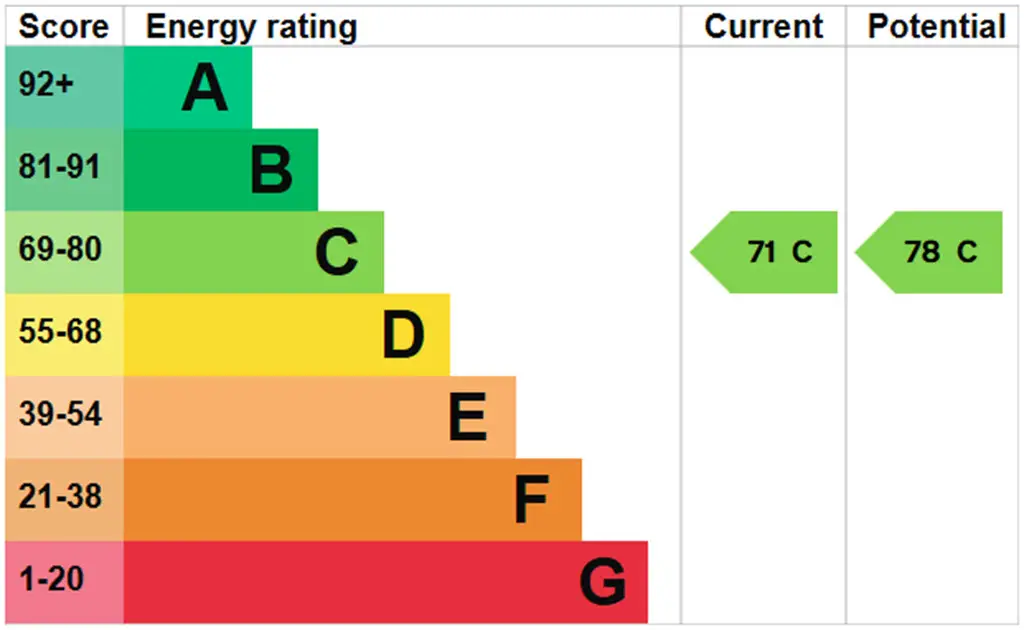
EPC "C" by 1 Oct 2030
.
For a residential EPC in England and Wales, a good assessor can produce a compliant EPC from inspection alone — but the accuracy of the rating often depends heavily on the evidence the landlord can provide.
EPCs are visual only and record the information seen on the day of the inspection. Without evidence, assessors are legally required under RdSAP conventions to enter many items as “unknown” or assume lower/default specifications. That can reduce the EPC rating unnecessarily.
Best Practice for Landlords
- Before the EPC visit: Gather all certificates into one folder, email documents/photos beforehand.
- Ensure access to: Loft, boiler, meters, all rooms.
- Clear obstructions from loft hatches and heating equipment.
The Biggest EPC Rating Mistakes Landlords Make
No boiler evidence – This alone can cost several SAP points.
No insulation proof – Especially: cavity wall insulation, room-in-roof insulation, floor insulation.
Boarding over loft insulation – Assessor cannot confirm depth.
Missing heat pump documentation – Often results in conservative assumptions.
Old EPC assumptions remaining – A previous EPC may contain outdated construction assumptions that persist unless corrected with evidence.
Essential Information for an Accurate EPC
1. Property Address and Basic Details
- Full address including postcode
- Property type: Detached, Semi-detached, Terrace, Flat/maisonette
- Approximate construction age if known – ideally landlord can copy the date from the property title document.
- Number of bedrooms
- Heating System Information – This is one of the biggest influences on EPC scores.
2. Boiler Details
This allows the assessor to use exact efficiency data rather than generic assumptions.
- Boiler make and model,
- Installation date
- Service paperwork if available
- Benchmark certificate
- Photos of boiler data plate
Useful documents:
- Boiler installation certificate
- Gas Safe certificate
- User manual
- Warranty paperwork
3. Heating Controls
Many landlords lose SAP points because advanced controls cannot be evidenced.
Evidence of:
- Programmable thermostat
- Smart controls
- Thermostatic radiator valves (TRVs)
- Zoned heating
- Weather compensation controls
Photos are often enough.
4. Loft Insulation
If insulation cannot be seen due to boarding or storage, photographic evidence becomes important.
Provide:
- Depth of insulation (e.g. 270mm)
- Installation invoices
- Photos before boarding
- Building control documents
5. Wall Insulation
Without evidence, walls may be recorded as uninsulated.
For cavity wall insulation:
- Guarantee certificate
- Installer invoice
- CIGA certificate
For internal/external insulation:
- Building control sign-off
- Photos during works
- Specifications/invoices
6. Floor Insulation
Floor insulation is frequently missed because it cannot be visually inspected.
Useful evidence includes:
- Renovation photos
- Building control paperwork
- Insulation invoices
- Construction drawings
7. Glazing Information – Windows & Doors
Especially important for: Triple glazing, new low-E double glazing, secondary glazing.
Provide:
- FENSA certificate
- Installation invoice
- Window manufacturer details
- Approximate installation date
Especially important for: Triple glazing, new low-E double glazing, secondary glazing.
8. Solar PV Panels
Solar can materially improve EPC ratings.
Provide:
- MCS certificate
- Installation documents – schematic
- Number of panels
- Orientation if known
- Battery storage details
- Bill showing export payments
9. Solar Thermal / Heat Pumps
Heat pumps especially require accurate technical information.
Provide:
- Installation certificates
- Manufacturer/model
- Commissioning documents
- MCS paperwork
10. Low Energy Lighting
The assessor records fixed lighting only, but counts every bulb and type. This can slightly improve ratings.
Useful preparation:
- Ensure LED bulbs are installed in fixed fittings before inspection
- Replace halogens/incandescent where practical
11. Evidence of Extensions or Conversions
This helps determine: Construction age bands, insulation assumptions and wall types.
Provide:
- Building control approvals
- Planning documents
- Construction details
- Renovation photos
12. Flat-Specific Information
If applicable:
- Which floors are heated
- If communal corridors are heated
- Construction type
- Conversion date
Important Point About Evidence
Under RdSAP rules, assessors cannot simply “take the landlord’s word for it” for many items.
Evidence usually needs to be:
- Documentary
- Photographic – ideally with a geotagging/time stamp photo app like solocator
- Visually confirmed onsite – Assessor needs proof the photo is of this property
**** If no proof exists, the assessor must use default assumptions. ****

Article by:
Walter Colin WARD
Domestic Energy Assessor
Date: 27/05/2026